Home / Hacking services
Hacking contractor in Singapore
Wall, floor tile, screed and built-in removal for homes and commercial units, with approvals checked upfront and disposal included.
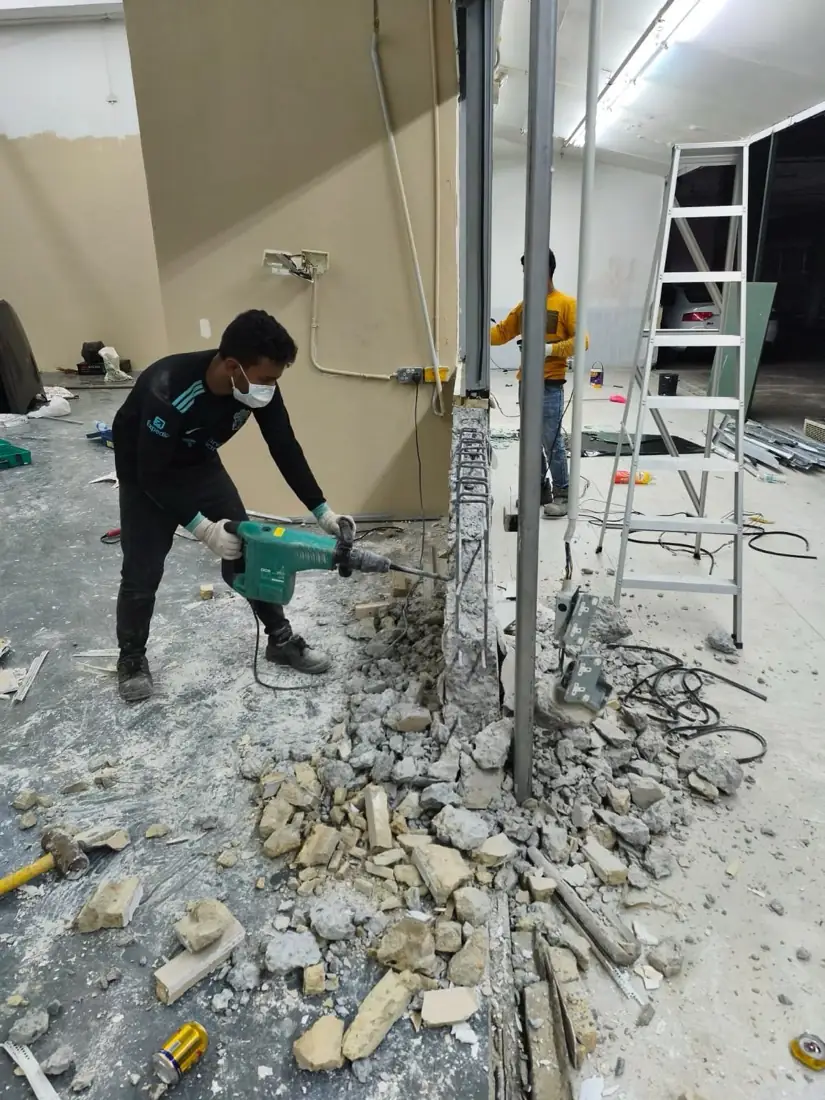
- Approvals checked first
- Disposal included
- Floors and fittings protected
What hacking covers
In Singapore, “hacking” means breaking out and removing walls, floor tiles, wall tiles, screed and built-in structures, usually as the first stage of a renovation or as part of reinstatement.
- Wall hacking: removing non-structural brick, block or drywall partitions, fully or to make an opening
- Floor hacking: removing floor tiles and screed down to the slab before new flooring
- Wall tile hacking: kitchens, toilets and service yards
- Built-in removal: kitchen cabinets, platforms, bathtubs, carpentry and false ceilings
- Debris disposal: bagging, haulage and disposal included in the price
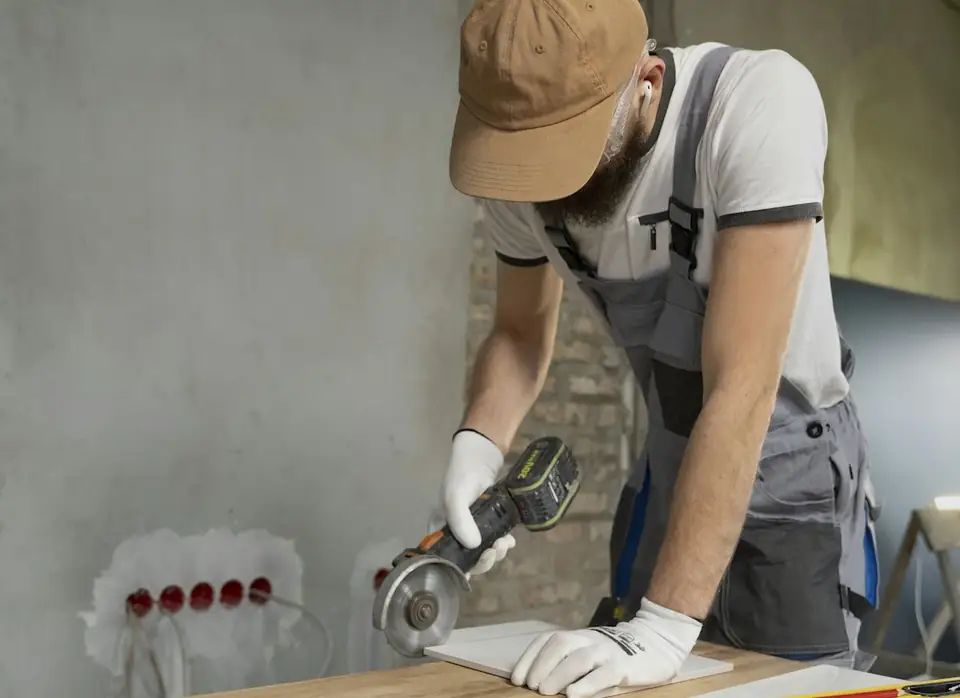
Hacking in HDB flats: the rules
HDB controls hacking work in flats closely. Before any wall is hacked:
- Hacking a wall needs an approved HDB renovation permit, and the work must be carried out by a contractor on HDB’s Directory of Renovation Contractors.
- Structural walls, and the beams above removed walls, cannot be hacked. Some masonry walls need a Professional Engineer’s endorsement.
- Noisy works such as hacking are allowed only from 9am to 5pm on weekdays, not on weekends or public holidays, and for no more than three days in a row. See HDB renovation timing.
We tell you upfront whether a wall can be hacked and what approvals your job needs. For condos, the management corporation usually has its own renovation rules and deposit.
Commercial and industrial hacking
For offices, shops, warehouses and factories, hacking is often part of a larger strip-out or reinstatement job: removing block walls, toilets, kitchens, floor finishes or old platforms. We plan the works around building management rules and working hours.
Before the hacking starts
- Confirm which walls and floors are to go, ideally on a marked-up floor plan
- Check approvals: HDB permit, condo management approval, or building management for commercial units
- Clear furniture and valuables from the area, or let us cover what stays
- Agree access, lift protection and working hours with the building
- Plan the follow-on trade (tiling, flooring, carpentry) so the unit isn’t left open
Hacking cost
Hacking is usually priced per job after a site visit, based on the area, the material (brick and concrete take longer than drywall), access, and disposal volume. Send photos of the walls or floors and the unit type on WhatsApp for an initial estimate.
Hacking jobs we handle
| Job | What’s removed | Typical time |
|---|---|---|
| Toilet hacking | Wall and floor tiles, screed, vanity and fittings, down to the waterproofing layer or slab | 1–2 days per toilet |
| Kitchen hacking | Wall and floor tiles, cabinets, platform and sink; non-structural wall if approved | 1–3 days |
| Floor tile hacking | Tiles and screed across living areas and bedrooms | 2–4 days for a typical HDB flat |
| Wall hacking | Non-structural brick, block or drywall walls, fully or to make an opening | 1–2 days per wall |
| Commercial hacking | Block walls, toilets, pantries, platforms and floor finishes in offices, shops and warehouses | Planned around building rules |
Times are for the hacking itself and depend on area, material and access. Detail by job: kitchen hacking and hacking floor tiles.
HDB, condo and commercial: what's different
| HDB flat | Condo | Commercial unit | |
|---|---|---|---|
| Approval | HDB permit through a DRC-listed contractor | Management corporation approval and deposit | Landlord or building management; BCA or SCDF if the works need it |
| Noisy work hours | 9am–5pm, weekdays only | Set by the condo’s by-laws | Set by the building; malls often after trading hours |
| Key limits | No structural walls; 3-year rule for wet areas | No structural walls; by-law limits | Fire safety and building rules |
More on the HDB side: HDB renovation guidelines and the HDB permit for hacking. For commercial approvals, see A&A works.
How a hacking job runs
- Photos or site visit. We confirm what’s to go and whether any wall is structural.
- Approvals. Permit or management approval in place, and neighbours notified.
- Protection. Lift, corridor, floors and fittings that stay are covered.
- Hacking. Done within the allowed noisy hours, with dust kept down.
- Debris removal. Bagged and cleared daily, not left in the corridor.
- Handover. Surface left ready for waterproofing, screeding or tiling.
What to check before hiring a hacking contractor
- For HDB flats, the contractor must be on HDB’s Directory of Renovation Contractors.
- Debris disposal and lift protection are written into the quote.
- Who applies for the permit or management approval, and when work can start.
- How many days the noisy work will take, and what happens if it overruns.
Related guides
Get a price for your unit
Send photos, the floor plan and your handover date. Site surveys are free and every quotation is itemised.
Questions we get asked
Can’t see yours? Send it on WhatsApp with a photo of the unit.
Can any wall be hacked?
No. Structural walls and the beams above them cannot be removed. Non-structural walls can usually be hacked with the right approvals; we check before quoting.
Is debris disposal included?
Yes. Bagging, haulage and disposal are included in the quotation.
How long does floor hacking take?
A typical HDB flat’s floor tiles can often be hacked in 2–4 days, depending on area, screed thickness and access.
Do you protect the rest of the unit?
Yes. We cover floors, doors and fittings that stay, and control dust as far as practical.
Can hacking be done on Saturdays in HDB flats?
No. Noisy works such as hacking are only allowed from 9am to 5pm on weekdays, and not on weekends or public holidays.
How long does toilet hacking take?
Usually one to two days per toilet for the hacking itself, depending on the tile layers and access.
Tell us your handover date
We’ll reply with an initial estimate and a time for a free site survey.