Bare shell vs original condition vs warm shell
These three phrases decide how much you have to remove at the end of a lease, and the difference can be thousands of dollars. Here’s what each one usually means.
Updated 26 October 2026
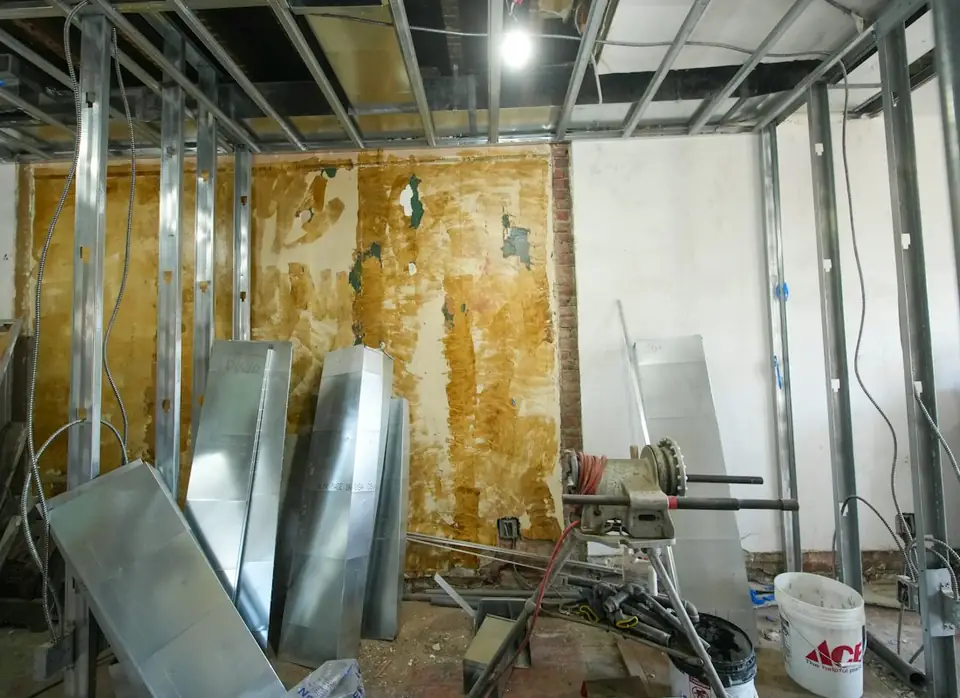
In short: Bare shell means stripping a unit back to the building's base: bare floor, no tenant ceiling, base services only. Original condition means returning it as it was when you moved in. Warm shell is a basic fitted state with ceiling, lighting and air-conditioning. Your lease's reinstatement clause decides which applies.
In this guide
The short answer
- Bare shell: the unit stripped back to the building’s base: bare concrete floor, no false ceiling or a basic exposed ceiling, and base building services only.
- Original condition: the unit as it was when you took it over, which may include the landlord’s ceiling, carpet, lighting or partitions.
- Warm shell: a basic fitted state, usually with ceiling, lighting, air-conditioning and a basic floor finish in place, ready for a tenant’s fit-out.
Leases define these terms differently, so always read your own reinstatement clause and the landlord’s handover checklist.
What each usually requires you to remove
| Item | Bare shell | Original condition | Warm shell |
|---|---|---|---|
| Partitions and carpentry | Remove | Remove anything you added | Remove |
| False ceiling | Usually remove | Keep the landlord’s, remove yours | Keep or restore a basic ceiling |
| Floor finishes | Remove to bare slab | Restore the original finish | Basic finish in place |
| Lighting and power | Base building only | As at handover | Basic lighting and power |
| Air-conditioning | Base building layout | As at handover | Basic distribution in place |
How this changes the reinstatement cost
Bare shell usually means more removal: ceilings, flooring and services back to the base building. Original condition can cost less if the landlord’s fittings are still in good shape, or more if you must re-supply items you took out. Getting the requirement wrong is a common reason quotes from different contractors don’t match.
See the reinstatement cost guide for typical prices per sq ft.
How to confirm what your lease means
- Find the reinstatement or “make good” clause in the tenancy agreement and any fit-out guidelines.
- Ask the landlord or building management for the handover checklist.
- Find the handover photos or condition report from when you moved in.
- Ask whether the landlord or the incoming tenant wants to keep anything, and get it in writing.
- Have the contractor survey the unit against the clause before quoting.
Negotiating with the landlord
If the next tenant wants your partitions or ceiling, the landlord may waive their removal. Written agreement is essential: a verbal “it’s fine” doesn’t help at the joint inspection. More on the process in office reinstatement.
An example: the same office, two requirements
Take a 2,000 sq ft office with a landlord-installed ceiling grid and carpet, plus the tenant’s glass meeting rooms and pantry.
- Original condition: remove the glass rooms and pantry, patch and paint, replace damaged ceiling tiles and carpet. The landlord’s ceiling grid and carpet stay.
- Bare shell: everything above, plus removing the ceiling grid, lighting and carpet, and scraping the slab clean.
The bare shell scope is clearly larger, which is why confirming the requirement is the first step in any quotation. See the reinstatement cost guide for rates.
In offices, the difference often comes down to partitions and floor finishes. See partition wall removal and carpet removal for what each involves.
Related guides
Need help with this?
We handle office reinstatement across Singapore, with a free site survey and an itemised quotation. See office reinstatement, or WhatsApp us photos of the unit.
Get a price for your unit
Send photos, the floor plan and your handover date. Site surveys are free and every quotation is itemised.
Questions we get asked
Can’t see yours? Send it on WhatsApp with a photo of the unit.
What does bare shell mean for an office?
Bare shell usually means the office stripped back to the building’s base: bare concrete floor, no tenant ceiling or partitions, and base building services only.
What is the difference between bare shell and warm shell?
Bare shell is stripped back to the structure and base services. Warm shell has basic fittings in place, such as ceiling, lighting and air-conditioning.
Is original condition cheaper than bare shell?
Often, because the landlord’s own fittings stay. But if you removed or damaged the originals, you may need to restore them.
Where is the reinstatement requirement written?
In the reinstatement or make good clause of the tenancy agreement, and often in the landlord’s handover checklist.
Want a price for your unit?
We’ll reply with an initial estimate and a time for a free site survey.